Mac and cheese is a beloved comfort food in America. It's loved by kids and adults alike for its creamy texture and rich flavor.

The classic macaroni and cheese recipe is a timeless favorite. Its simplicity and versatility make it perfect for many variations. In this article, we'll dive into the traditional mac and cheese recipe and some exciting twists to make it even better.
Key Takeaways
- Classic mac and cheese recipe for a comforting meal
- Variations to enhance the traditional recipe
- Tips for achieving the perfect creamy texture
- Exploring different types of cheese for unique flavors
- Adapting the recipe for various dietary needs
The History and Evolution of Mac and Cheese
Mac and cheese has a rich history, starting in Europe and becoming a favorite in America. This dish has changed a lot over time. It was shaped by culture and economics.
Origins in Europe
The first mac and cheese recipes were in 14th-century Italy. It was a luxury for the rich because of the expensive cheese and pasta. As trade grew, mac and cheese spread across Europe, with each place adding its own twist.
Mac and Cheese in America
Macaroni and cheese came to America in the 18th century. It was a hit with the wealthy. The first American recipe was in 1794, thanks to Thomas Jefferson's chef, François Benoît. It soon became a favorite for everyone, becoming a key part of American comfort food.
From Luxury Dish to Comfort Food
Mac and cheese changed from a luxury to a comfort food because of money and technology. The 20th century brought processed cheese and boxed mac and cheese. This made it cheaper and easier to make, making it a staple in American food.
| Year | Event | Impact on Mac and Cheese |
|---|---|---|
| 14th century | First recorded mac and cheese recipes in Italy | Established mac and cheese as a European dish |
| 18th century | Mac and cheese introduced to America | Popularized the dish among the colonial elite |
| 20th century | Introduction of processed cheese and boxed mac and cheese | Made mac and cheese more affordable and convenient |
Why Mac and Cheese Remains America's Favorite Comfort Food
Mac and cheese is loved in America for many reasons. It has captured the hearts of many. Its popularity keeps growing.
Nostalgia Factor
The nostalgia factor is a big reason for its love. It brings back memories of childhood and family times. This emotional bond keeps it a favorite in many homes.
Versatility and Adaptability
Its versatility and adaptability also play a big role. You can make it your own, from classic to gourmet. This makes it perfect for any meal or event.
https://www.youtube.com/watch?v=_cDF4u8RnPk
Cross-Cultural Appeal
Mac and cheese is loved by people of all ages and backgrounds. It's enjoyed in many forms worldwide. This broad appeal keeps it a top comfort food.
In short, mac and cheese is loved for its nostalgia, versatility, and global appeal. These qualities ensure it remains a favorite in America's culinary scene.
Essential Ingredients for the Perfect Mac and Cheese Recipe
To make an exceptional mac and cheese, start with the best ingredients. The quality of the dish depends on the quality of its parts.
Pasta Options and Considerations
The pasta type greatly affects the mac and cheese's texture and taste. Popular choices are cavatappi, elbow macaroni, and shells. Choose pasta that holds onto the cheesy sauce well.
Cheese Selection Guide
Cheese is key in mac and cheese. Mixing cheeses gives the best taste. Cheddar adds sharpness, while Gruyère brings richness. Parmesan and Gouda add depth.
Base Ingredients for the Sauce
The sauce base is milk or cream and a roux of flour and butter. The roux thickens the sauce, making it smooth and creamy.
Optional Flavor Enhancers
To make your mac and cheese unique, add optional flavor enhancers. Try spices like paprika or cayenne pepper. Or, add cooked bacon or caramelized onions. Different add-ins can create a special flavor.
Equipment and Tools You'll Need
Getting the perfect mac and cheese needs the right mac and cheese equipment. The right tools can really make your dish better.
Cookware Essentials
You'll need a big pot for boiling pasta. A heavy-bottomed pot or a non-stick saucepan is best for the cheese sauce. It heats evenly and stops the sauce from sticking and burning.
Helpful Gadgets and Utensils
- A wooden spoon or silicone spatula is great for stirring the sauce.
- A grater is needed for grating cheese.
- A colander is needed for draining the pasta.
Bakeware Options
If you're baking your mac and cheese, you'll need a
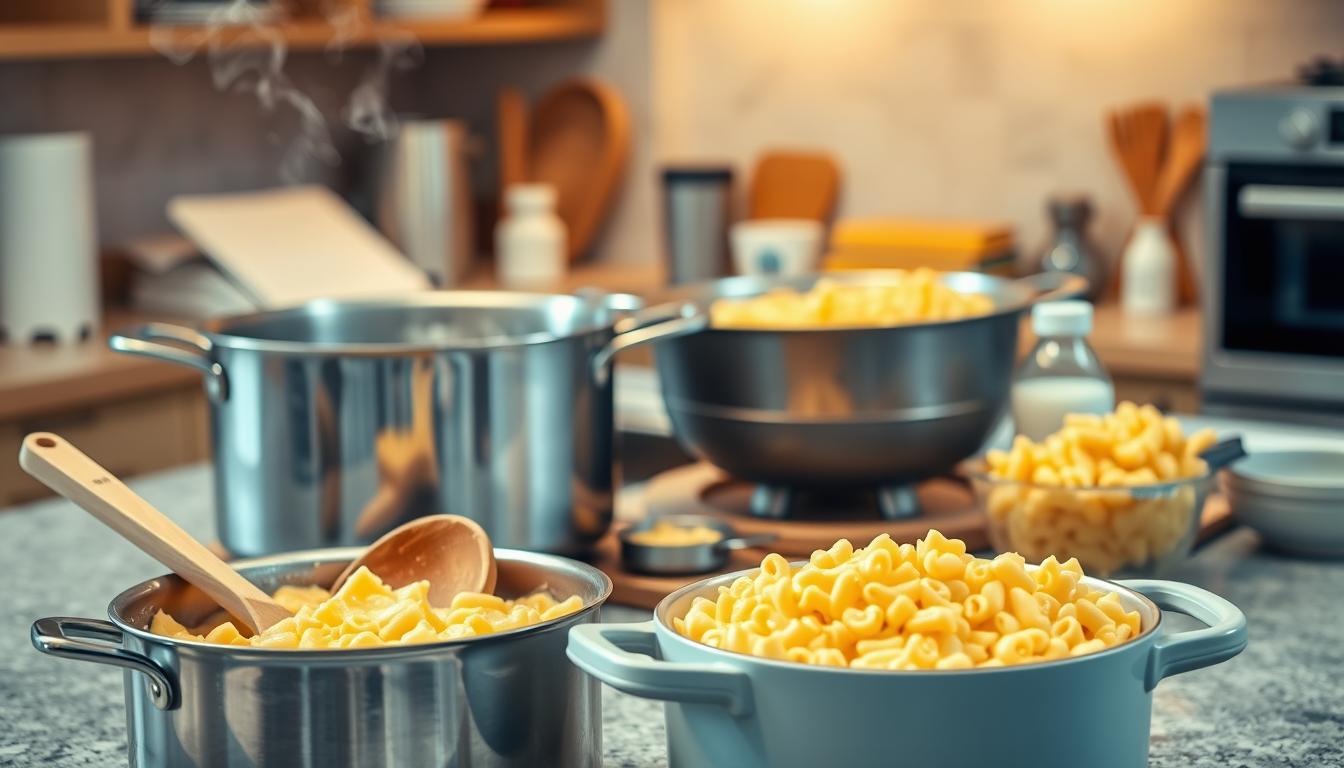
. "The right bakeware can make your mac and cheese look and taste better," says a culinary expert.
The Classic Mac and Cheese Recipe Step-by-Step
Here's a detailed guide to making the classic mac and cheese recipe that your family will love. This dish is a favorite in many homes. Follow this guide to make a creamy, cheesy macaroni and cheese that everyone will enjoy.
Ingredient List and Measurements
To make this mac and cheese step-by-step recipe, you'll need the following ingredients:
- 8 oz macaroni
- 2 cups milk
- 2 cups grated cheddar cheese
- 1 cup grated mozzarella cheese
- 1/4 cup all-purpose flour
- 1/2 teaspoon salt
- 1/4 teaspoon black pepper
- 2 tablespoons butter
Preparation Time and Yield
This classic mac and cheese recipe takes about 20 minutes to prepare. It cooks for 25-30 minutes. It makes 4-6 servings, great for family dinners or small gatherings.
Nutritional Information
Here's a breakdown of the macaroni and cheese nutritional information per serving (assuming 6 servings):
| Nutrient | Amount per Serving |
|---|---|
| Calories | 350 |
| Fat | 18g |
| Carbohydrates | 25g |
| Protein | 15g |
Dietary Considerations
This classic mac and cheese recipe can be made to fit different diets. For gluten-free, use gluten-free pasta. To cut calories, use low-fat cheese and milk. For a vegan version, replace cheese with vegan alternatives and use plant-based milk.
Mastering the Perfect Mac and Cheese Recipe
To make the perfect mac and cheese, you need to pay attention to detail. It's important to know the key parts that make this dish so loved.
Creating the Perfect Roux
The roux is the base of a great mac and cheese. Mix equal parts of fat (like butter) and flour in a pan over medium heat. Stir constantly to avoid lumps, until it turns light golden. This step thickens the sauce and adds flavor.
Cheese Sauce Techniques
Now, make the cheese sauce. Start by adding milk to your roux, whisking to prevent lumps. Simmer until it thickens. Then, remove it from heat and mix in your cheeses until smooth. For creamier sauce, add heavy cream or grated Parmesan.
Pasta Cooking Tips
Cooking pasta al dente is key for the best mac and cheese. Boil it in salted water until just tender. Drain and set aside to cook a bit more when baked.
Combining and Baking Methods
Mix the cooked pasta with the cheese sauce until coated. Put it in a baking dish, add more cheese and/or breadcrumbs on top. Bake until golden and bubbly. For a crispy top, broil for a minute or two, watching to avoid burning.
Mastering these steps will help you make a mac and cheese that everyone will love.
Stovetop vs. Baked Mac and Cheese
Mac and cheese is a favorite comfort food. It can be made two ways: stovetop or baked. Each method gives different textures and tastes.
Differences in Texture and Flavor
Stovetop mac and cheese is creamy. This is because you stir the cheese sauce until it mixes well with the pasta. On the other hand, baked mac and cheese gets a crispy top. This adds a nice crunch.
The taste is different too. Stovetop mac and cheese tastes uniformly cheesy. Baked mac and cheese, however, gets a richer flavor. This is because of the Maillard reaction when it's baked.
When to Choose Each Method
Go for stovetop mac and cheese if you're in a hurry. It's creamy and comforting. Choose baked mac and cheese for a meal with a crunchy top.
Converting Between Methods
To turn stovetop mac and cheese into baked, just put it in a baking dish. Add more cheese or breadcrumbs on top. Bake until it's golden.
If you have a baked recipe, you can make it on the stovetop. Skip the baking step. Adjust the cheese sauce as needed.
| Method | Texture | Flavor |
|---|---|---|
| Stovetop | Creamy | Uniform cheesy taste |
| Baked | Crispy top, creamy inside | Richer, more complex |
Delicious Variations of Mac and Cheese
Exploring different mac and cheese recipes can lead to finding new favorites. This comfort food is more than just one dish. It can be changed to fit many tastes and diets.

Gourmet Cheese Combinations
Try gourmet cheese mixes to make mac and cheese fancy. Cheeses like truffle gouda, goat cheese, or aged cheddar add depth. Mixing sharp cheddar with creamy brie and parmesan creates a rich taste.
Protein Add-ins
Adding protein makes mac and cheese more filling. Bacon, ham, grilled chicken, or lobster are great options. They add flavor and make the dish more satisfying.
Vegetable Inclusions
Adding veggies can also spice up mac and cheese. Roasted broccoli, cauliflower, or caramelized onions add sweetness. Steamed spinach or sautéed mushrooms bring freshness and color.
International Flavor Profiles
International flavors can give mac and cheese a unique twist. Korean chili flakes add spice, while curry powder brings an Indian taste. These global touches make the dish exciting for adventurous eaters.
Exploring these variations keeps mac and cheese interesting. It ensures the dish stays fresh and tailored to your taste.
Troubleshooting Common Mac and Cheese Problems
Even with a simple recipe, mac and cheese can present several challenges. Whether you're a novice cook or an experienced chef, issues like grainy sauce, undercooked pasta, or bland flavor can arise.
Grainy Sauce Solutions
A grainy sauce can be a result of improper melting of the cheese. To avoid this, gradually add cheese to the roux, stirring constantly over low heat. If your sauce has already turned grainy, try whisking in a little more flour or cornstarch to thicken, then reheat gently.
Fixing Undercooked or Overcooked Pasta
Undercooked pasta can be salvaged by returning it to boiling water for a few more minutes. Conversely, overcooked pasta can be remedied by mixing it with a bit more cheese sauce or cream to restore moisture.
| Pasta Issue | Solution |
|---|---|
| Undercooked | Return to boiling water |
| Overcooked | Add more cheese sauce or cream |
Adjusting Sauce Consistency
If the sauce is too thick, thin it out with a bit of milk or cream. If it's too thin, simmer it gently to reduce, or add a roux to thicken.
Rescuing Bland Flavor
Bland mac and cheese can be revived by adding seasonings like paprika, garlic powder, or mustard. You can also introduce new flavors with add-ins like cooked bacon, ham, or various vegetables.
Serving and Pairing Suggestions
Make your mac and cheese even better with great serving and pairing ideas. Add side dishes, choose the right drinks, and make it look good. This turns a simple dish into a full meal.
Complementary Side Dishes
Choosing the right side dishes can make your mac and cheese meal better. Try a fresh green salad or roasted vegetables to balance the flavors. You can also add garlic bread or a grilled vegetable skewer for extra taste.
Beverage Pairings
The perfect drink can make your mac and cheese even more enjoyable. A glass of iced tea or refreshing lemonade is a classic choice. If you like wine, a dry white wine like Chardonnay or Sauvignon Blanc pairs well.
Presentation Ideas
How you present your mac and cheese matters. Top it with a crunchy breadcrumb mixture or some fresh herbs like parsley or thyme. Serving it in individual ramekins can also make it look fancy.

Storing, Freezing, and Reheating Tips
Meal prepping or saving leftovers? Knowing how to store and reheat mac and cheese is key. The right methods keep it creamy and flavorful.
Refrigeration Guidelines
Cool mac and cheese to room temperature within two hours after cooking. Then, put it in an airtight container and chill it. It stays good for 3 to 5 days in the fridge.
Freezing Methods
Freezing is great for longer storage. Divide it into airtight containers or freezer bags. Make sure to remove air before sealing. Label them with the date and what's inside. Frozen mac and cheese lasts up to 3 months.
Best Reheating Practices
Thaw frozen mac and cheese in the fridge overnight if needed. Reheat it in the oven at 350°F (175°C) with foil on top until hot and bubbly, about 20-30 minutes. For a crispy top, take off the foil for the last 5-10 minutes.
| Storage Method | Duration | Reheating Tip |
|---|---|---|
| Refrigeration | 3-5 days | Oven or Microwave |
| Freezing | Up to 3 months | Oven, thaw overnight |
Conclusion: Bringing Joy Through the Perfect Mac and Cheese
Making the perfect mac and cheese is more than a recipe. It's about creating a dish that brings people together. The joy of mac and cheese comes from its comforting warmth, rich flavors, and versatility.
We've looked at the history, key ingredients, and techniques for the perfect mac and cheese. By mastering this dish, you can make something both personal and satisfying. Whether you stick to classic recipes or try gourmet twists, mac and cheese will become a favorite in your kitchen.
As you keep trying new recipes, you'll see that mac and cheese is more than just food. It's about the memories and moments you share with others. The perfect mac and cheese is a true comfort food classic, starting a new culinary adventure for you and your loved ones.
FAQ
What is the best type of pasta to use for mac and cheese?
For mac and cheese, choose short, tubular pasta like cavatappi, elbow macaroni, or shells. They catch the cheesy sauce well.
Can I use different types of cheese for mac and cheese?
Yes, you can mix and match cheeses. Cheddar, Parmesan, Gruyère, and Gouda are popular. Mixing them adds depth to the flavor.
How do I prevent my mac and cheese from becoming grainy?
To avoid graininess, melt cheese slowly over low heat while whisking constantly. A roux-based sauce also helps achieve a smooth texture.
Can I make mac and cheese ahead of time?
Yes, you can make mac and cheese ahead. Assemble it, then refrigerate or freeze until baking time. Adjust the baking time as needed.
How do I reheat leftover mac and cheese?
Reheat mac and cheese in a saucepan over low heat, stirring often. Or, reheat in the oven at 350°F (175°C) until warm. Adding milk or cream can restore creaminess.
What are some creative ways to serve mac and cheese?
Serve mac and cheese as a side or add bacon, ham, or chicken for a main dish. Top it with breadcrumbs, crispy bacon, or a fried egg for extra flavor and texture.
Can I freeze mac and cheese?
Yes, you can freeze mac and cheese. Cool it, then put it in an airtight container or freezer-safe bag. Thaw and reheat as needed.
How do I adjust the consistency of my mac and cheese sauce?
If the sauce is too thick, add milk or cream. If it's too thin, simmer it until thickened. Or, add a slurry of flour and butter.
Comments
Post a Comment